Most chains force developers into one virtual machine. Lithosphere is built to support several at once, natively
Every smart contract platform makes an early, mostly invisible decision: which virtual machine developers are required to build on. That choice ends up shaping almost everything downstream — which languages are available, which developer communities feel at home, and which existing tools and libraries can be reused versus rebuilt from scratch. Pick the EVM and you get Solidity’s enormous ecosystem. Pick something else and you’re often starting over.
The usual workaround for chains that want to reach developers outside their native VM is bridging — stand up a separate chain or environment for the other VM, then connect the two with a bridge. It works, technically, but it also reintroduces exactly the kind of friction and fragility multi-chain systems already struggle with: bridges are slower, they’re a common point of failure, and they treat the two environments as fundamentally separate systems that happen to talk to each other, rather than one coherent network.
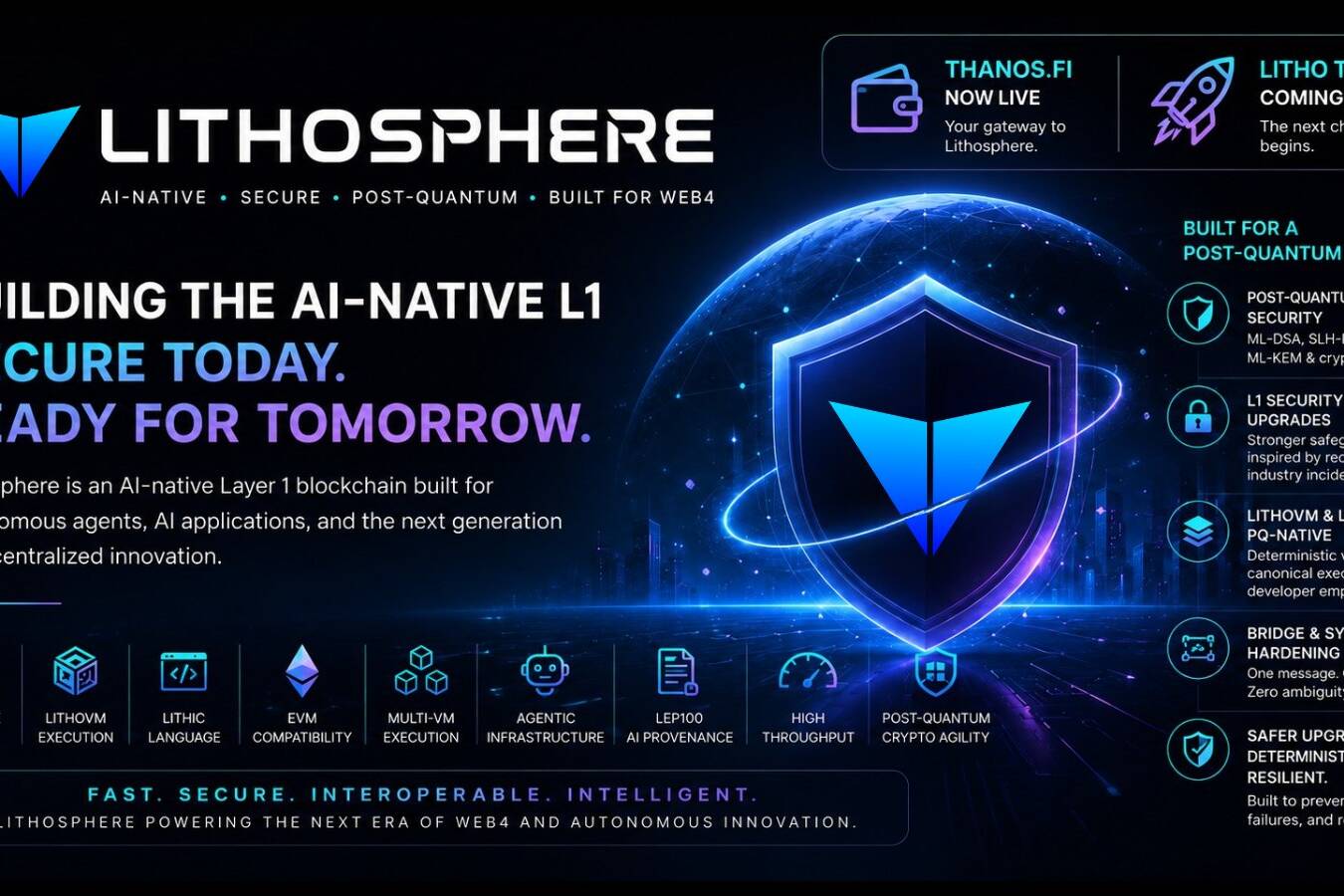
A genuine multi-VM Layer 1 takes a different approach: instead of picking one VM and bridging to the rest, it supports several natively, on the same network, under the same validator set. That’s the direction Lithosphere is building toward — a chain capable of natively executing contracts across the EVM, the Solana Virtual Machine, CosmWasm, a native high-performance LithoVM, and WebAssembly, with Move VM support planned for the future.
The unifying pieces are what make this more than just several chains sitting next to each other. A single validator network processes all of it, rather than each VM having its own separate security assumptions. Liquidity is shared across VMs instead of fragmented into isolated pools. Contracts on different VMs can call each other natively, without a bridge in between. Accounts work under one unified model, supporting both litho1… and 0x… address formats depending on which environment a user or contract is interacting with. And everything runs on one gas token, LITHO, with the LEP100 token standard usable consistently across every VM rather than needing a separate token standard per environment.
What that unlocks in practice is real: a developer could deploy a Solidity-based DeFi protocol on the EVM side, build a high-speed order book using the SVM, launch an NFT marketplace through CosmWasm, and run AI agents natively on LithoVM — with all of it interacting directly, paying gas in the same token, and drawing from the same shared liquidity, instead of existing as four disconnected applications that happen to share a brand name.
That’s the actual promise of a multi-VM Layer 1: not forcing every developer through the same door, but giving them several doors into the same building. The harder engineering work is making sure it still feels like one building once they’re inside — shared liquidity, native cross-VM calls, and one account model doing the work of making four different execution environments feel like a single coherent network rather than four chains wearing the same name.